


Key Summary
- Founder syndrome usually starts with good intentions, but too much founder involvement can slow decisions and limit team ownership.
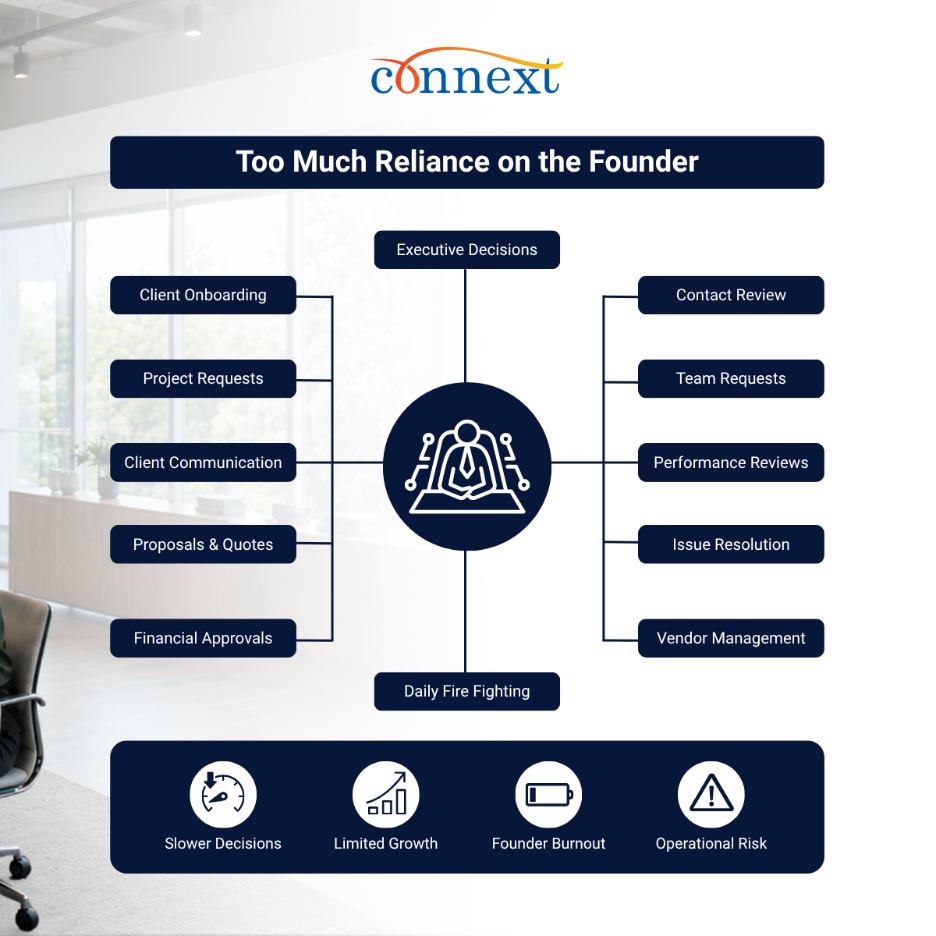
- Operational bottlenecks appear when approvals, problem-solving, and process direction depend too heavily on one person.
- Scaling operations requires clear ownership, documented workflows, trusted managers, and performance visibility.
- A co-management model helps business owners delegate execution while maintaining oversight, quality control, and alignment with company standards.
- Growth becomes more sustainable when founders stay focused on strategy, culture, and client relationships while the right teams manage repeatable work.
In the early stage of a business, staying close to every process often feels like responsible leadership. Owners often review hires, approve client decisions, check workflows, and step in when something feels uncertain. That hands-on approach can help a company survive early growth. But over time, it can become founder syndrome, where the business starts operating at the pace of one person instead of the strength of the team.
Sustainable growth requires a different kind of leadership. Founders have to move from personally driving every process to building systems, managers, and workflows others can lead. In this article, you’ll learn how founder syndrome creates operational bottlenecks, and how leaders can move beyond it without losing visibility, quality, or control.
Why Founders Become the Final Checkpoint
When you build a company from the ground up, people naturally come to you for context, judgment, and final approval. You know the client history, the early mistakes, the standards, and the details behind each process.
But as the company grows, that pattern becomes harder to sustain. One of the biggest challenges of scaling a business is learning that the habits that helped you start the company may need to evolve as the operation becomes more complex.
I’ve seen this firsthand. Scaling operations requires more than hiring people. It requires clear decision rights, documented workflows, trusted managers, and a structure that allows the team to move with confidence even when the founder is focused elsewhere.
The Operational Risk Centralized Work
The founder trap starts quietly. You stay close to every decision because you want to protect quality, client relationships, and the standards that helped the company grow. I understand that instinct because, in many ways, that level of involvement is what gets a business off the ground.
But as the company expands, too much centralization creates operational bottlenecks. Decisions begin to slow down because managers are waiting for approval, and teams become less confident in taking ownership. Over time, the business starts to depend on individual oversight instead of repeatable structure. This is where a co-management model with strong co-management can help.
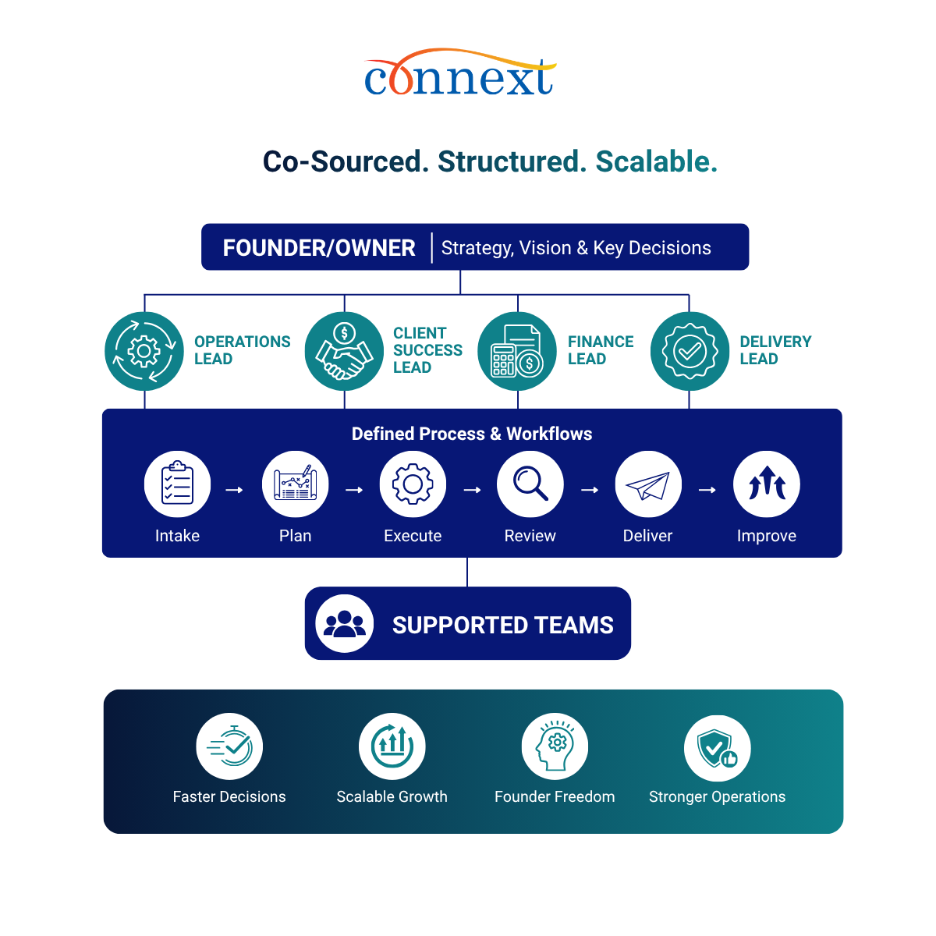
Co-management gives companies a way to expand execution through dedicated teams, clear workflows, and shared accountability. It also keeps leadership connected to performance, priorities, and outcomes.
The Hidden Cost of Founder Dependency
One of the hardest shifts for any founder is realizing that involvement and control are two different things. I’ve learned that strong leadership means staying close to the direction of the business while giving the team enough structure to execute with confidence.
Founder dependency creates a hidden cost. It limits how quickly the company can respond to clients, improve processes, and develop new leaders. The business may still be moving forward, but it is carrying too much weight at the top.
Xero, a cloud-based accounting software provider, found that financial pressure, fatigue, and avoidance cost U.S. small business owners an average of 33 working days of productivity each year. The data shows how quickly the weight at the top can become a measurable business risk. of productivity each year. The data shows how quickly the weight at the top can become a measurable business risk.
This is where scale operations management becomes important. Growing companies need clearer ownership, repeatable systems, performance visibility, and decision-making guardrails.
How Co-management Helps Distribute Execution
For many founders, the concern is simple: if I step back from the process, will quality slip? That is why co-management can be a practical answer to founder syndrome.
Co-management gives business owners a way to build dedicated support teams around the work that needs consistent execution. Through offshore staffing, companies can add capacity while still keeping leadership connected to direction, standards, and performance. The goal is to create more room to grow while maintaining visibility into how the work gets done.
In my experience, growth becomes easier to manage when teams have clear roles, documented workflows, and shared accountability. The founder stays close to strategy, clients, and culture, while the right people are trusted to carry more of the day-to-day execution.
What Business Owners Should Delegate First
One of the biggest challenges of scaling a business is deciding what to let go of first. I usually look at the work that is important to the business but repeated often enough to be structured.
That may include administrative workflows, finance and accounting support, customer service, scheduling, reporting, documentation, claims follow-up, recruiting coordination, or other back-office processes. These functions may seem tactical, but they can pull leaders away from the work that matters most: strategy, client relationships, and growth decisions.
Learning how to read a company organizational chart matters. It helps founders see where work sits today, where decisions are getting stuck, and which roles need clearer ownership.
Strong scaling operations start with clarity. Define the process, assign ownership, set expectations, and measure performance. When the right work is delegated with the right structure, founders create more room for the business to grow beyond their personal capacity.
Final Takeaway
I’ve learned that growth depends on more than hard work from the founder. Effort can start a company, but structure is what allows it to scale. When every process depends on one person, the business eventually reaches a ceiling. The next stage requires clearer ownership, stronger systems, and teams that can execute with confidence.
For founders, the shift is about building a company that can move with you, instead of always through you. When the right structure is in place, decisions move faster, teams take greater ownership, and leaders gain the capacity to focus on what comes next.
Frequently Asked Questions
Founder syndrome happens when a business becomes too dependent on the founder for decisions, approvals, problem-solving, and direction. It often starts with good intentions. The founder wants to protect quality, culture, and client relationships. Over time, the company can begin operating through one person instead of through clear systems, trusted leaders, and repeatable processes.
Common founder syndrome examples include the founder approving every hire, reviewing every client’s decision, joining too many operational meetings, personally solving team issues, or being the final checkpoint for routine work. Another sign is when managers hesitate to make decisions because they are waiting for the founder’s input.
The founder trap is the pattern where the habits that helped build the business begin to limit its growth. In the early stages, close founder involvement can help the company move quickly. As the business grows, that same level of involvement can create delays, dependency, and operational bottlenecks.
Operational bottlenecks are points in the business where work slows down because decisions, approvals, resources, or processes are too limited. In a founder-led business, bottlenecks often happen when too much work depends on one person. This can affect hiring, client service, finance, reporting, customer support, and day-to-day operations.
You fix a bottleneck in operations management by identifying where work slows down, clarifying who owns each step, documenting the process, and giving the right people authority to act. Strong reporting also helps leaders stay connected to performance without reviewing every task personally.
The biggest challenges of scaling a business include maintaining quality, hiring the right people, keeping processes consistent, developing managers, protecting company culture, and creating accountability. Growth puts pressure on the systems behind the business. As demand increases, the company needs a structure that can support faster execution.
Start by separating work that requires founder-level judgment from work that can be delegated with the right structure. Repeatable tasks, administrative workflows, reporting, customer support, finance support, scheduling, and back-office processes are often good places to begin. The key is to define expectations, assign ownership, and measure outcomes.
Co-management is a workforce model where a company works with an external partner to build and support dedicated teams while keeping visibility, direction, and shared accountability. The partner may support recruiting, onboarding, HR, payroll, IT, facilities, and local management, while the client stays connected to priorities, standards, and performance.
A co-management model differs from traditional BPO because it is designed to feel more integrated with the client’s business. In many traditional BPO arrangements, work is handed off to a vendor. In co-management, the team operates more like an extension of the company, with clearer visibility, closer collaboration, and shared responsibility for outcomes.
A founder should consider co-management when growth is creating more work than the internal team can manage, when leaders are spending too much time on repeatable processes, or when operational bottlenecks are slowing decisions. It can be especially useful when the business needs more capacity while still maintaining structure, visibility, and control.
Start building a business that can grow beyond the founder.
Connect with a Connext specialist to design a co-sourced team that helps you delegate repeatable work, improve operational visibility, and create the structure needed to scale with confidence.
Visit https://connextglobal.com/contact/ or email sales@connextglobal.com