


Key Summary
- Managing teams in the Philippines requires strong leadership, clear structure, and consistent day-to-day management.
- Visible and consistent leadership helps teams stay aligned, engaged, and confident in how they perform.
- Strong local managers are essential for translating business goals into clear execution on the ground.
- Long-term retention comes from trust, fairness, clear communication, and a stable work environment.
I have spent a large part of my career leading operations in the Philippines, and one thing has become very clear to me over time: strong teams are built through consistent leadership.
A lot of companies enter the market through Philippines outsourcing because they see the talent and cost advantage, or the opportunity to scale faster. The Philippines offers an exceptional workforce with strong communication skills, adaptability, and a service mindset that is hard to replicate elsewhere.
But building a successful team here is not just about hiring people. It is about how you lead them. That distinction matters.
Leadership Starts With Presence
One of the biggest mistakes leaders make is becoming too distant from the operation. You cannot effectively lead teams in the Philippines from reports alone. Metrics, dashboards, and forecasts matter. But numbers only tell part of the story.
If you want to understand how a team is really performing, you need to stay close to the work, the managers, and the people delivering it every day. That does not mean micromanaging. It means being present enough to spot friction early, understand what teams need, and make adjustments before small issues turn into larger ones.
In any operation, employees can tell very quickly whether leadership is engaged or detached. When leaders are visible, attentive, and responsive, teams operate with more confidence. When leadership feels distant, uncertainty tends to grow.
That principle applies anywhere, but it is especially important in the Philippines, where team culture, communication, and managerial trust have a major impact on performance.
Respect Is a Management Discipline
When people talk about Philippines outsourcing, they often reduce it to cultural friendliness or hospitality. Those qualities matter, but effective leadership goes much deeper. Employees here want what employees everywhere want: clarity, fairness, support, and confidence that standards matter, and strong performance will be recognized.
Respect in management is more than being nice. It means being prepared, consistent, and professional, with clear direction, follow-through, and the same standards across the organization.
People notice inconsistent leadership, uneven accountability, and vague communication. Strong managers remove that uncertainty by setting clear expectations and providing the support people need to perform well.
Great Teams Built Through Local Leadership
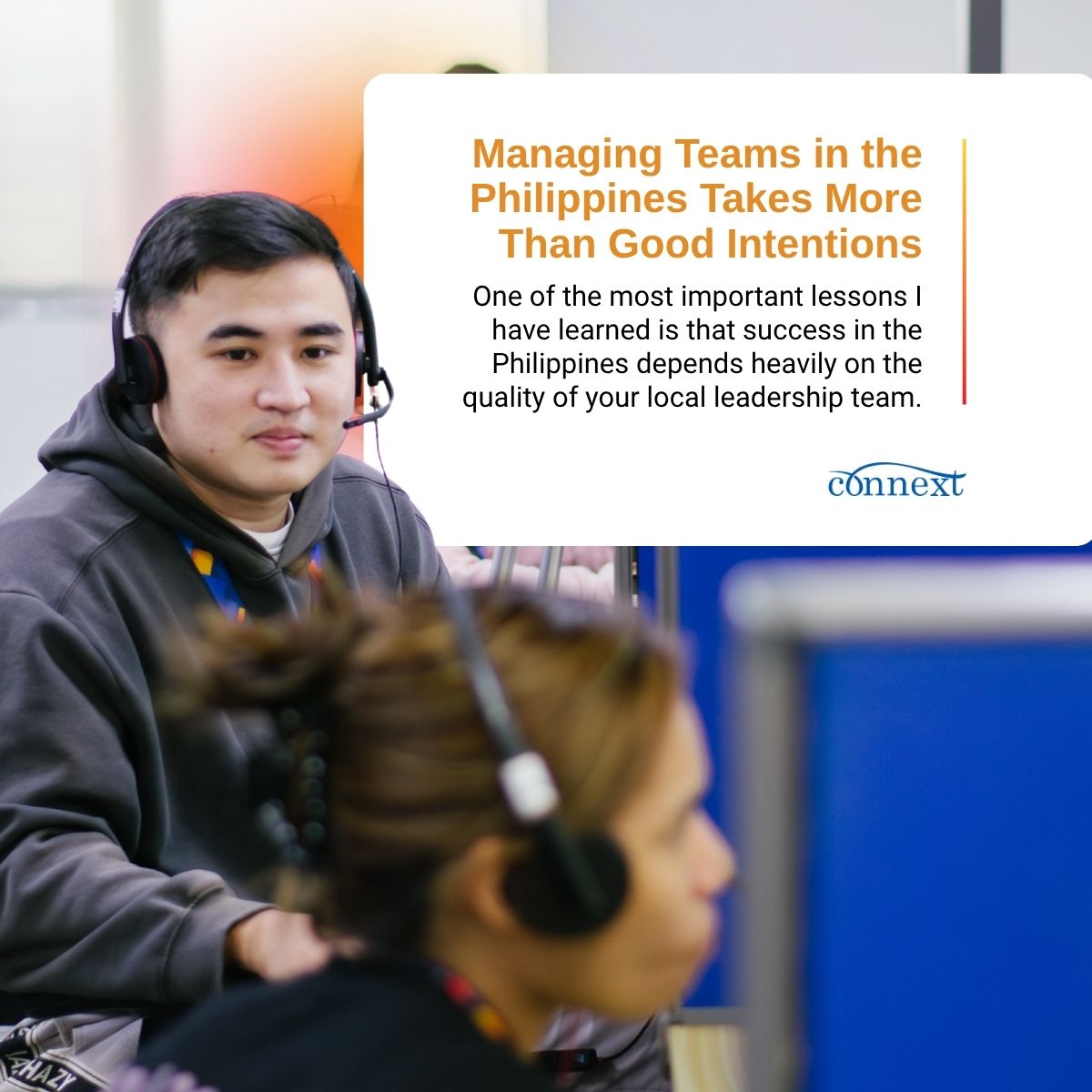
Success in the Philippines depends heavily on the strength of the local leadership team. Companies need managers who understand both business goals and how to lead Filipino teams effectively.
They must be operationally strong, clear communicators, good coaches, and credible decision-makers. Many companies focus on frontline hiring but underinvest in the management layer that supports it. Without strong local leadership, team performance eventually plateaus.
I have seen that sustained performance comes from building the right structure around the team. That includes strong operations leaders, reliable support functions, clear processes, and regular alignment between clients and on-site management. Employees perform better when the system around them is stable.
Clear, Direct, and Consistent Communication
Managing employees in the Philippines is not about softer communication. It is about clearer communication. In offshore environments, ambiguity creates unnecessary risk. When expectations are unclear, priorities shift, or feedback comes too late, execution starts to slip.
Strong management depends on communication rhythm. Regular one-on-ones, manager check-ins, operational reviews, and clear escalation paths help teams stay aligned. When people feel supported and know how to raise issues, execution becomes more confident and effective.
Retention Built Through Trust and Opportunity
The Philippines has a deep and capable talent market, but it is also highly competitive. Compensation matters, but retention depends on more than pay. People stay where they feel stable, valued, and well-managed, with strong communication, fair expectations, and room to grow.
Employee management is not just an HR issue. Retention is an operational outcome that reflects the quality of leadership over time. At Connext, that means reinforcing retention through consistent management support, employee engagement programs, and a workplace culture designed to help people stay and grow.
This culture is shaped by Connext’s values: putting clients first, going above and beyond, doing what’s right, taking ownership, fostering teamwork, hiring the best, being transparent, innovating, and making work meaningful and engaging. These values guide how teams are supported every day, helping employees feel trusted, connected, and motivated to perform at a high level over the long term.
Managing Philippines Teams Is a Competitive Advantage
The Philippines remains one of the best places in the world to build scalable support teams. I have seen firsthand the quality, resilience, and professionalism of the workforce here across customer service, back office, technical support, healthcare, and many other functions.
But the real advantage comes from leadership. If you manage employees in the Philippines with discipline, consistency, and respect, you can build teams that become a real extension of your business. You get operational strength.
That is the difference between simply having people in the market and actually building a team that performs. And in my experience, that is where long-term success is won.
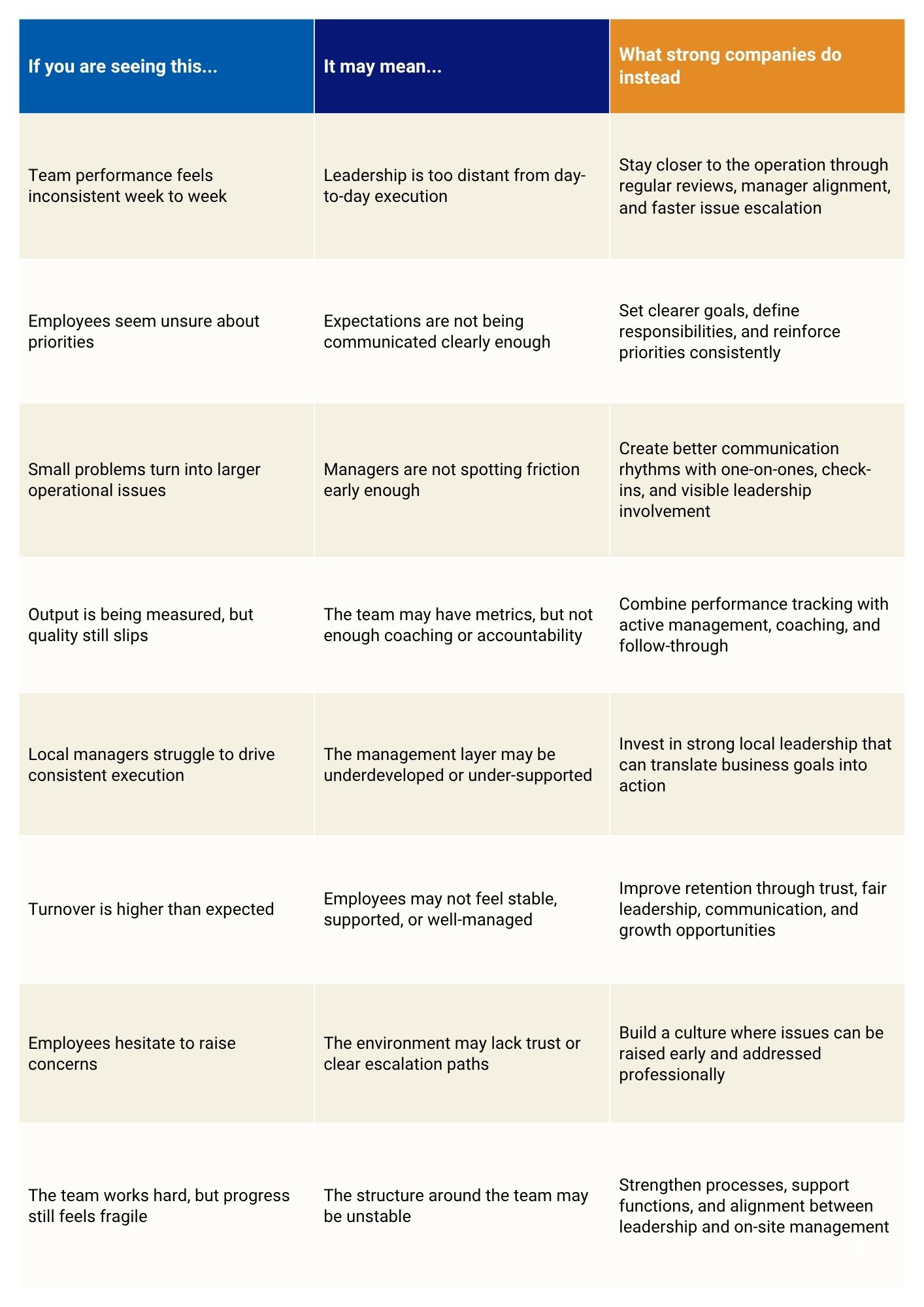
Identify what may be affecting the performance, stability, and retention of your offshore team in the Philippines using the table below. If a problem shows up repeatedly, the issue is usually a leadership, communication, or management structure issue.
Final Takeaway
Many companies approach Philippines outsourcing as if it is simply a remote extension of a spreadsheet. They focus on headcount, shift coverage, output targets, and reporting lines, but they do not put enough attention into the day-to-day leadership required to help people succeed. When that happens, performance becomes inconsistent, engagement drops, and turnover becomes harder to control.
In my experience, managing employees in the Philippines requires a combination of structure, visibility, respect, and consistency. The companies that get that right tend to build teams that stay longer, perform better, and grow with the business.
Frequently Asked Questions
The biggest mistake is focusing too much on hiring and output metrics while underinvesting in day-to-day leadership, communication, and local management support.
Strong local leaders help bridge business goals with on-the-ground team realities, creating better communication, stronger accountability, and more consistent performance.
Retention improves when employees experience clear expectations, fair management, strong communication, professional development, and a stable, well-led work environment.
Managers should communicate regularly through one-on-ones, team check-ins, operational reviews, and clear escalation channels to keep expectations aligned and issues from building up.
The fundamentals are the same, but success in the Philippines depends heavily on strong local leadership, consistent communication, and a management approach that builds trust, clarity, and stability.
Filipino work culture often places a high value on respect, teamwork, reliability, and maintaining strong working relationships. Managers who provide clear direction, consistent support, and professional respect usually build stronger trust and better long-term performance.
Filipino business culture tends to value professionalism, relationship-building, and respectful communication alongside strong execution. Companies that understand this are usually better positioned to lead effectively, avoid unnecessary friction, and create a more stable operating environment.
Culture plays a major role in outsourcing in the Philippines because team performance depends on more than process and staffing. Understanding Filipino culture in the workplace helps companies communicate more effectively, manage expectations more clearly, and build offshore teams that are more engaged, consistent, and easier to retain.
Ready to build and manage a high-performing team in the Philippines?
Schedule a free workforce consultation with a Connext specialist.
Visit https://connextglobal.com/contact/ or email sales@connextglobal.com