
Key Takeaways:
- Reception and front-desk work is non-clinical. Moving it offshore protects local hiring budget and management attention for the caregiving roles that must stay on-site.
- An outsourced nursing home receptionist handles calls, scheduling, and family communication under the facility’s own protocols, not as a separate answering service.
- The goal is not to replace clinical staff. It is to stop spending scarce local capacity on work that does not require a nurse, an aide, or an on-site presence.
Ask any nursing home or senior living administrator which open position keeps them up at night, and reception won’t be it. Nurses, aides, and caregivers will, since hands-on care is harder to staff than a front desk.
But easier to fill doesn’t mean free. Every hour an administrator spends recruiting, training, or covering reception is an hour pulled away from the harder hire.
With most senior living operators reporting a staffing shortage, that tradeoff carries real consequences. An outsourced nursing home receptionist takes that workload off a facility’s plate, freeing up local hiring budget and management time for direct resident care.
This article covers what the role handles offshore, and why it’s a capacity gain, not a clinical one.
What is a Nursing Home Receptionist?
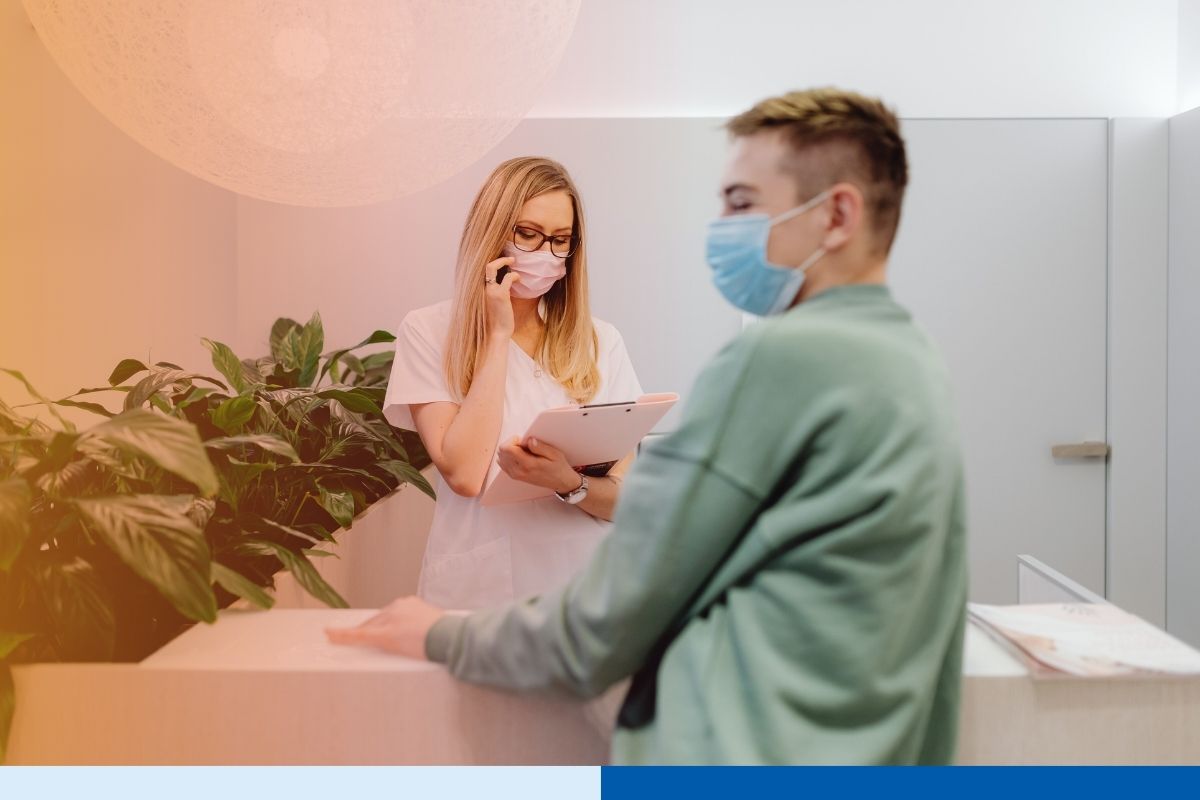
A nursing home receptionist is the first point of contact for a senior living community. The role covers incoming calls, scheduling, visitor coordination, and family communication, freeing clinical and administrative staff to focus on resident care.
In an outsourced model, this role is staffed and managed by an outside partner, but it still operates inside the facility’s own systems, scripts, and protocols.
What the Role Actually Covers, On-Site vs. Outsourced
The day-to-day responsibilities of a nursing home receptionist are largely the same whether the role sits on-site or is outsourced. The key difference is who performs the work and how the role fits into the facility’s broader operations. Here’s what those responsibilities typically include:
Call handling and routing
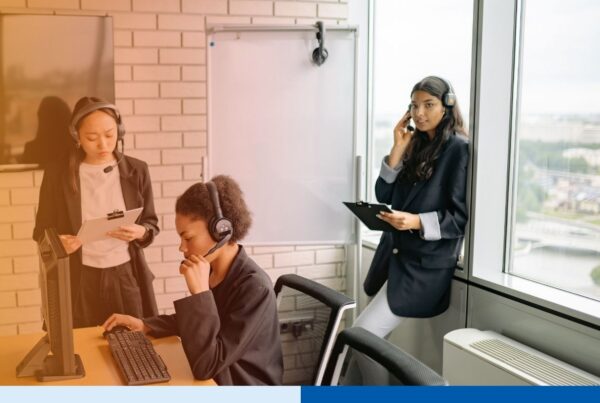
Every call into a senior living community carries weight. A prospective family doing research, a physician’s office confirming an order, or a resident’s adult child checking in matters. An outsourced receptionist answers, triages, and routes those calls the way an on-site hire would, following the facility’s own call flow.
Scheduling and calendar management
Tours, care conferences, physician visits, and vendor appointments all compete for the same calendar. Keeping that calendar accurate and current is steady, detail-heavy work. It does not require a clinical license, which makes it a strong candidate to move off a stretched local team’s plate.
Family and visitor communication
Families calling a senior living community are often anxious. The tone of that first conversation shapes how much they trust the facility from that point forward. Outsourced receptionists trained specifically for healthcare and senior living settings learn to handle those calls with the same care an in-house team would bring.
Intake and referral support
New resident inquiries and referral coordination often start with a phone call or an online form. Routing those leads quickly and accurately, without losing them in an inbox, protects both occupancy and the facility’s standing with referring physicians and hospitals.
Why This is a Capacity Gap, Not a Clinical One
The clearest way to think about this shift is capacity, not accountability. A facility’s clinical team, and the facility itself, still owns every decision about resident care. A virtual receptionist in healthcare, specifically in a senior home, does not diagnose, triage medical concerns, and replace a nurse or a caregiver.
What moves offshore is the non-clinical, high-volume administrative work sitting in front of those roles.
That distinction matters for two reasons. First, it keeps the facility fully in control of the decisions that affect resident outcomes. Second, the hiring budget and management hours a facility saves on reception can go directly toward recruiting and retaining caregiving staff. Those are the roles that are genuinely hard to find right now.
HELP US REACH MORE PEOPLE
Like what you’re reading?
Add Connext as a preferred source on Google — it only takes a moment and helps more professionals find our content.
- 1 Click Add as preferred source below
- 2 Sign in to your Google account if prompted
- 3 Check the box next to Connext Global to confirm your preference
- 4 Close the tab — you're done. Thank you!
What to Look for in an Outsourced Reception Services Partner for Senior Living
Not every healthcare virtual receptionist provider is built for a setting where callers may share protected health information. Before choosing one, check for the following:
- A HIPAA-compliant environment – Every call may touch a resident’s health information, so the partner’s systems and staff training need to meet HIPAA standards, not just general customer service protocols.
- SOC 2 Type II certification – This confirms the partner’s data security and operational controls have been independently audited over time, not just self-reported.
- Healthcare-specific training, not a general call center script – Staff should know healthcare terminology and, just as important, how to handle an anxious or urgent family call with care.
- Dedicated staff, not a shared queue – A receptionist assigned to your community learns your residents, families, and protocols. A rotating pool of shared agents never does.
- Flexibility for volume swings – Call volume shifts with tours, admissions cycles, and seasonal demand. The partner should be able to flex hours and coverage without a lengthy renegotiation.
- Familiarity with the scheduling and EHR tools you already use – A partner who can work inside your existing systems gets up to speed faster and creates less disruption for your on-site staff.
Connext’s healthcare teams check each of these boxes: HIPAA-trained protocols, a SOC 2 Type II certified environment, and receptionists dedicated to a single client rather than rotated through a shared call queue.
Why Partner with Connext
Connext builds outsourced reception teams through a co-management model. You set the protocols, scripts, and standards, while we handle recruiting, HR, payroll, and day-to-day oversight through an in-country team manager.
That structure lets the receptionist operate as a genuine extension of the on-site team, not a rotating call center queue. Every healthcare account runs on HIPAA-trained staff inside a SOC 2 Type II certified environment. This model is built for senior living operators managing multiple communities and growing headcount, not a single-desk fix.
Conclusion
Senior living operators don’t have room to waste hiring budget or management attention right now. With the large majority of the industry reporting a staffing shortage, every local hire needs to go toward the roles that require a caregiver’s hands and judgment.
Outsourced reception services are one of the lowest-risk ways to make that trade. It moves steady, non-clinical work off site while keeping full control over how residents and families are cared for.
Contact Connext to learn more about our outsourced receptionist services.
Frequently Asked Questions
Can an outsourced receptionist handle protected health information about residents?
Yes, when the partner operates in a HIPAA-compliant environment. Staff should be trained specifically on handling protected health information over the phone, and the facility should confirm this in writing before sharing call scripts or resident details.
How does an outsourced receptionist coordinate with on-site nursing and care staff during an urgent family call?
The receptionist follows an escalation protocol set by the facility. Urgent or clinical calls route directly to the on-site nurse or administrator on duty, rather than being handled by the receptionist. The outsourced team operates as an extension of the facility’s own process, not a separate decision-making layer.
How is this different from a general answering service or call center?
A general answering service typically handles overflow calls with a shared, rotating pool of agents and a generic script. A receptionist dedicated to one facility learns that community’s residents, families, staff, and protocols, and operates far closer to how an in-house hire would.
How quickly can a senior living community add outsourced front desk coverage?
Timelines vary by partner and by how much customization the role requires. Most facilities should expect a phased onboarding that starts with training on the community’s specific call flow and systems before the receptionist goes live.
Does this model work for a single community, or only multi-site operator groups?
It scales either way. The strongest fit is often a growing or multi-site operator group looking to standardize front desk coverage across communities, without hiring and training a separate receptionist at every location.
What happens to walk-in visitors if reception moves offshore?
Outsourced reception covers phone and digital channel communication, not in-person visitor management. Most communities pair it with an on-site presence for walk-ins, tours, and deliveries, while the outsourced team handles everything coming through the phone line and inbox.