



The article discusses what shared services is and how it helps your business.
Key Takeaways:
- Model: Centralizes shared functions (HR, finance, IT) across business units.
- Benefits: Cuts costs, increases control, boosts productivity, raises service quality.
- Consider if: You have multiple teams needing standardized support at scale.
- Shared services outsourcing model: A business strategy that centralizes common functions, such as HR, finance, IT, accounting, and customer service.
- Connext Global Solutions: Provides solutions for accounting, billing, customer service, development and other tasks.
Turn the Tables in ’21, adopt a Shared Services Model
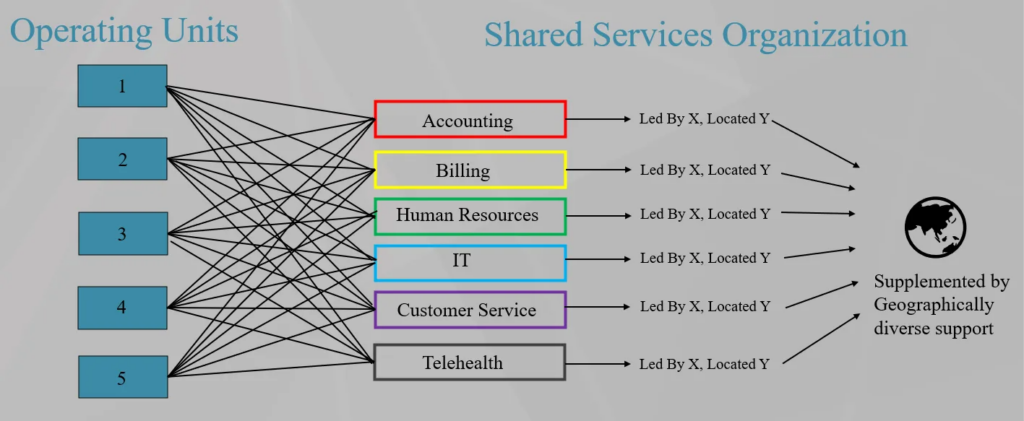
Shared services is a business model that re-imagines how a company with many different business units operate. In a shared services outsourcing model, companies connect business units through common functions to streamline and improve how they conduct business (See Figure 1). This often leads to more consistent and high-quality service delivery at lower cost. A hybrid shared services model means splitting the shared services between in house resources and outsourced resources. Outsourcing companies can perform certain functions at a significantly lower cost, and sometimes can even offer better performance, than locally sourced resources. The key is understanding what services you should send offshore and which services you should keep in house. A company like Connext Global Solutions can expertly perform functions such as accounting, billing, customer service, development, graphic design, transaction coordination, and various other tasks. When looking at the services described above you have to make the assumption that a BPO partner can often do it better and cheaper than you can locally.
What Is Shared Services Model?
A shared services outsourcing model is a business strategy that centralizes common functions, such as HR, finance, IT, accounting, and customer service, across multiple business units within an organization, streamlining operations and delivering consistent, high-quality service at a lower cost. A hybrid shared services model takes this further by splitting those functions between in-house resources and an outsourcing partner, allowing companies to reduce overhead while maintaining control over core operations.
Figure 1. Shared Services Model Diagram
The shared services model is designed to improve both efficiency and effectiveness. Lower labor support costs, greater control, increased productivity, increased skill levels, and better customer service are all examples of positive benefits from shared services outsourcing.
Everything in 2021 and beyond will be about driving costs down while driving customer experience and therefore revenue, up. Below is a sample forecast of 10-year support cost, assuming no growth, comparing local support cost versus outsourced support cost in shared services.
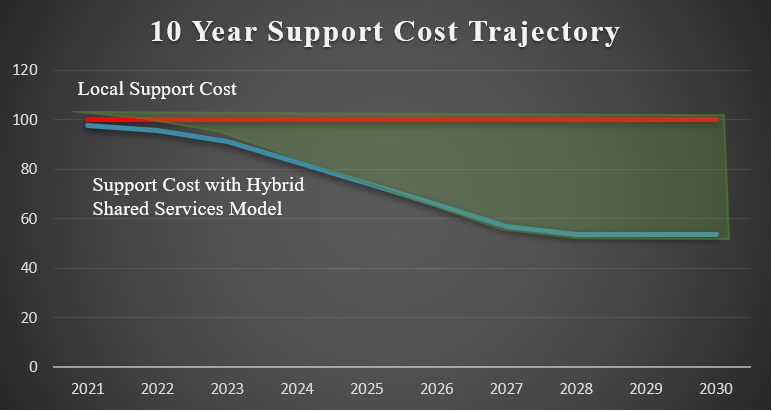
Figure 2. 10 Year Support Cost Trajectory in a Shared Service Model
The additional benefit of a shared services model, especially one with an outsourcing partner, is the reduction of facilities cost or the burden of managing a segregated, remote workforce. Companies like Connext have been managing and implementing remote teams for years before the pandemic created the need for most businesses. We reduce the cost and time associated with managing a remote team by having pre-established recruiting, facilities, reporting metrics, and day to day management procedures.
Why Shared Services Outsourcing Model Is Still Relevant in 2026
The shared services outsourcing model has not only stood the test of time, it has evolved into one of the most strategic business decisions a company can make in 2026. As economic pressures continue to demand leaner operations, and as global talent pools become increasingly accessible, businesses of all sizes are turning to shared services outsourcing to stay competitive, agile, and cost-efficient.
Several factors make the model more relevant today than ever:
- Rising operational costs: Businesses are under growing pressure to reduce overhead without sacrificing quality, making the cost advantages of shared services outsourcing a compelling and practical solution.
- Access to global talent: Companies can now build dedicated, high-performing support teams in talent-rich markets like the Philippines, delivering the same, and often superior, output at a fraction of the local cost.
- Remote work normalization: The shift to distributed workforces has made shared services outsourcing a natural fit, as businesses are already equipped with the tools and mindset to manage teams across borders.
- Scalability on demand: As businesses grow, shared services outsourcing allows organizations to scale support functions quickly and efficiently without the burden of additional infrastructure or hiring overhead.
In 2026, the question is no longer whether shared services outsourcing works, it is whether your business can afford not to adopt it.
Shared services is a great way for mid-sized businesses to scale and finding a suitable offshore partner reduces the risk exponentially. If you are thinking of implementing shared services, using an outsourcing partner is a great way to accelerate your path to success. To learn more contact us and find out how we can help you scale your operation through a Shared Services model. If you are looking for a suitable BPO partner check out our latest White Paper on "The Top 5 Mistakes When Choosing a BPO Partner."
Connext Global Solutions helps companies build custom, dedicated support teams in the Philippines. Learn more about Connext Global Solutions.
Like what you’re reading?
Add Connext as a preferred source on Google — it only takes a moment and helps more professionals find our content.




You're done. Thank you!