


As return-to-office mandates reshape workforce expectations, smart workload management has never been more critical. The importance of risk management in businesses cannot be understated.
How return-to-office is changing the outsourcing equation
In 2026, major employers have accelerated return-to-office (RTO) mandates, but the reality is nuanced. Hybrid work is now the dominant model, with most companies requiring 2–3 in-office days per week. This shift is creating new pressures on operational costs, talent retention, and workload distribution.
For businesses managing distributed functions, RTO policies have raised a key question: should non-core roles be brought back in-house, or is this the right moment to build a smarter offshore model? The answer increasingly points to structured outsourcing, but the model you choose matters.
As many businesses start to look at outsourcing certain functions it is important to distinguish between traditional outsourcing and a virtual captive model and to discuss the associated risks and benefits with each.
As many businesses start to look at outsourcing certain functions it is important to distinguish between traditional outsourcing and a virtual captive model and to discuss the associated risks with each.
What is Traditional Outsourcing
It is a business model where a company delegates specific, often routine or non-core tasks (such as customer support, data entry, or bookkeeping) to an external third-party vendor to reduce labor costs and improve efficiency.
What is Virtual Captive Model
A virtual captive model is an outsourcing arrangement where a business works with an offshore provider to build a dedicated team that functions as a seamless extension of the company itself, with full client control over staffing, processes, and performance.
Comparison Table: Traditional outsourcing vs. Virtual captive model
| Traditional Outsourcing Pay-per-hour, low control 1.Billed per production hour or headcount 2.Provider controls staffing decisions 3.Limited influence on turnaround time 4.Lower upfront cost, higher operational risk 5.Team experience and morale benefits the vendor, not you | Virtual Captive Model (Recommend) Full control, scalable teams 1.You control staffing, processes, and metrics 2.Reallocate resources and tasks at any time 3.Direct influence on turnaround performance 4.Team loyalty and morale stay with your brand 5.Scales with your business, not vendor capacity |
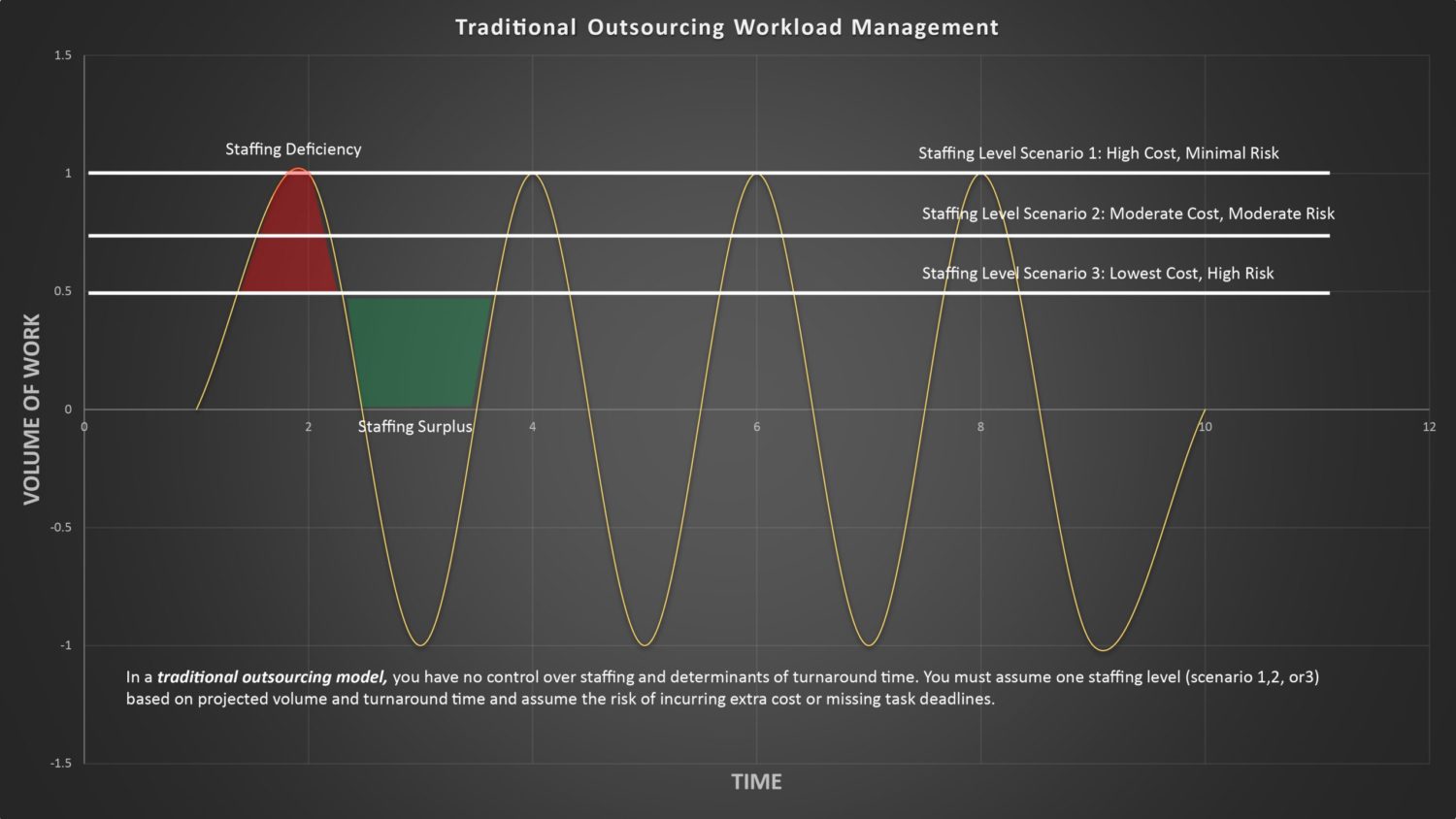
In a traditional outsourcing model, you are paying on a per production hour or staffing level basis with no control over staffing and determinants of turnaround time. This model may reduce your overall costs but its rigidity creates financial and operational risks.
In a virtual captive model, you have complete control over staffing requirements, processes, and turnaround metrics. This model mitigates risk by allowing the client to re-allocate resources and tasks at any time to ensure all tasks are being completed and a proper turnaround time is being achieved. This model also captures the value of growing team experience and morale.
Connext Global Solutions helps companies build custom, dedicated support teams in the Philippines. Learn more about Connext Global Solutions.
Like what you’re reading?
Add Connext as a preferred source on Google — it only takes a moment and helps more professionals find our content.




You're done. Thank you!